Website design cost is difficult to compare because “a website” can describe completely different products. A five-page marketing site, an ecommerce store, a multilingual property website and a web application can all be called website projects while requiring very different amounts of design, content, development and quality assurance.
The useful question is therefore not simply “How much should a website cost?” It is what are you paying for, which parts genuinely need custom work, and which parts can start from a strong existing design?
This guide gives business owners a practical way to compare quotes without assuming that the cheapest or most expensive option is automatically the right one.
What does website design cost in 2026?
There is no reliable single market average. Current published pricing varies materially by provider, project type and geography.
For context, Clutch's 2026 web-design pricing data says most web-design projects represented in its verified review data cost less than US$10,000, while shortlisted web-design companies commonly quote around US$100–149 per hour. Clutch also shows that individual projects can run from a few thousand dollars to well into five figures depending on scope. See Clutch's current web-design pricing guide.
Canadian published pricing also varies widely. For example, one Canadian studio currently publishes planning bands of roughly C$3,500–8,000 for a professionally designed small-business website, C$8,000–18,000 for brand/ecommerce projects, and higher starting points for custom platforms. Those are that provider's own planning bands, not a national average, but they illustrate why a quote only makes sense when the scope is visible. See the published Canadian example.
The practical takeaway is simple: compare deliverables, not just totals.
Start by separating design from the full website build
Many quotes combine several different services under one line item called “website design.” That makes comparison difficult.
A full project may include:
- strategy and discovery;
- information architecture;
- wireframes;
- visual design;
- copywriting;
- photography or illustration;
- frontend development;
- CMS or ecommerce setup;
- data or content migration;
- forms and integrations;
- SEO migration;
- accessibility testing;
- analytics and tracking;
- quality assurance;
- deployment; and
- post-launch support.
Two proposals can therefore use the same phrase — “custom website” — while one includes only design and development and the other includes months of content, migration, SEO and systems work.
Five common ways businesses buy a website
1. DIY website builder
The lowest cash-cost route is usually to build the site yourself using a hosted website builder or ecommerce platform. You pay the platform, theme, domain and any applications, but most of the design and content labour is your own.
This can make sense for a very early-stage business with simple needs and enough time to learn the platform. The hidden cost is your own time, and the result depends heavily on your ability to structure content, choose imagery, create a coherent visual system and test the site properly.
2. Ready-made or pre-designed website direction
A pre-designed route separates the expensive blank-canvas design phase from the business-specific implementation work. You start with a finished visual direction, then decide how much needs to be changed.
This works best when the design already fits the kind of business you are building. You can inspect the hierarchy, mobile behaviour and overall look before committing to a full build.
Depiction Studio is built around this model: businesses can browse complete website designs live, own a design, or use that design as the starting point for a customised build.
3. Template-led freelancer or studio build
A freelancer or small studio may start from a commercial theme, framework or component library and adapt it to the business.
This can be very cost-effective when the structure is conventional: home, services, about, case studies, blog and contact. The quality difference usually comes from how much attention goes into hierarchy, typography, responsive behaviour, content and polish — not simply whether a template was used.
4. Fully custom marketing website
A custom marketing site starts with the brand, content model and user journey rather than an existing visual direction.
This becomes more valuable when the business has unusual positioning, complex navigation, multiple audiences, a large content system, strong art direction, motion design or specific editorial requirements.
Custom does not automatically mean better. It means more decisions are being made from scratch, which generally means more time and cost.
5. Ecommerce, platform or web application
This is where cost can increase quickly because the project is no longer only about presentation.
An ecommerce site may need product architecture, collection rules, filters, variants, subscriptions, search, customer accounts, shipping logic, tax configuration, payments and third-party apps. A SaaS or portal may require authentication, permissions, dashboards, databases and business logic.
It is important to separate the cost of the marketing website from the cost of the software product itself. A polished SaaS landing page is not the same project as building the SaaS application.
The eight biggest factors that change website design cost
1. Number of unique page types
Page count matters less than page type.
Twenty service pages using the same layout are usually easier to produce than six completely different page systems. A project may need unique templates for home, services, case studies, team profiles, blog posts, locations, product pages and landing pages.
When reviewing a quote, ask how many unique layouts are being designed, not only how many URLs will exist.
2. Content quality and who creates it
Content is one of the largest hidden variables in website pricing.
If the business supplies final copy, approved photography and organised product/service information, the project is simpler. If the studio has to interview the team, write copy, source or direct photography, rewrite service pages and organise existing content, the scope grows significantly.
A low website quote can become expensive later if nobody has budgeted for the words and images that actually fill the pages.
3. Design originality
Adapting an established design system is different from creating one from scratch.
Custom art direction can involve concept development, typography research, custom grids, illustration, iconography, motion systems and multiple design explorations before a direction is approved.
If a business already knows the visual direction it wants, a pre-designed starting point can remove a large amount of exploratory work.
4. Responsive and mobile complexity
Responsive design is not simply “make it smaller.” Complex layouts may need different navigation, content order, image crops, interaction patterns and sticky controls at tablet and mobile widths.
A design that relies on large horizontal compositions, dense data, hover states or unusual scrolling can require substantially more responsive engineering than a conventional content page.
5. Ecommerce and integrations
Every system the website has to talk to can add implementation and testing work.
Common examples include:
- Shopify or another commerce backend;
- booking systems;
- CRMs;
- email marketing platforms;
- payment systems;
- inventory systems;
- membership or account systems;
- property/listing feeds;
- analytics and consent tools; and
- custom APIs.
Even when a connector already exists, configuration, styling, error handling and QA still take time.
6. CMS and content migration
A redesign often looks cheaper until migration is included.
Moving 100 blog posts, team profiles, case studies or products can involve URL mapping, redirects, formatting cleanup, metadata transfer, image optimisation and manual QA.
If the existing site already receives search traffic, preserving important URLs and redirects is part of the project — not optional housekeeping.
7. Accessibility, performance and quality assurance
Accessibility and performance should be considered during design and development, not bolted on at the end.
Keyboard navigation, visible focus states, colour contrast, form labels, image alternatives, responsive testing, browser compatibility and performance optimisation all require deliberate work.
Cheap builds often appear fine in one desktop browser while leaving these details unresolved.
8. Revision process and project management
A quote may include one design direction and two revision rounds, or several concepts with open-ended review. Those are different projects.
More stakeholders also increase coordination time. A founder-led five-page site can move quickly; a project requiring approval from marketing, legal, IT and leadership will usually take longer even when the final website is visually simple.
Three Depiction Studio examples that show why scope matters
Visual quality alone does not tell you how expensive a website should be. The underlying system matters more.
Halden Ward: premium service-business presentation
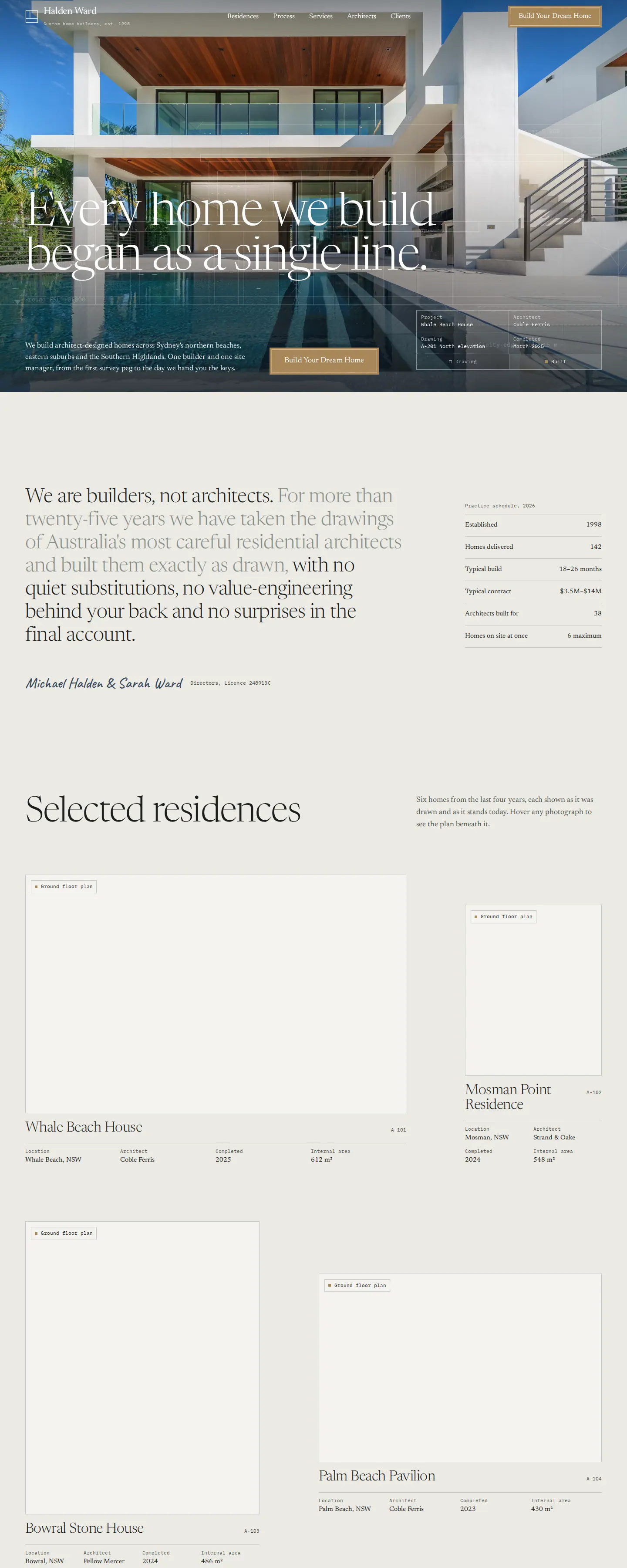
Halden Ward is a luxury custom-home builder concept with a strong editorial homepage, selected residences, an explanation of the build process, specification details and testimonials.
It looks highly art-directed, but its core website job is still a marketing and portfolio experience. There is no need to build checkout, customer accounts or application logic. That makes it a good example of a website where premium visual design does not automatically mean software-level complexity.
Divara Couture: ecommerce adds operational scope
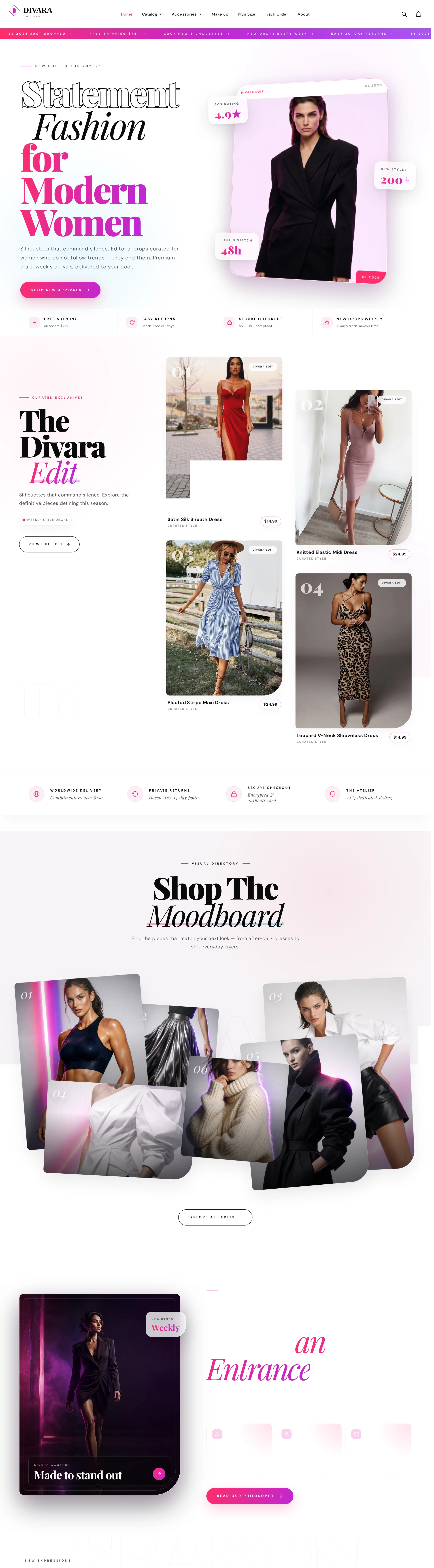
Divara Couture is part of Depiction Studio's Shopify and ecommerce design collection. Even when the visual system is minimal, ecommerce requires more states and more testing than a conventional brochure site.
Product discovery, product pages, collection behaviour, cart states, responsive product media and checkout handoff all affect the project. The platform handles a large amount of core commerce infrastructure, but the business still needs decisions around merchandising, navigation and conversion flow.
If you are deciding between a hosted platform and a more custom ecommerce approach, our guide to Shopify vs a custom ecommerce website goes deeper into that trade-off.
Noema: a SaaS website is not the SaaS product
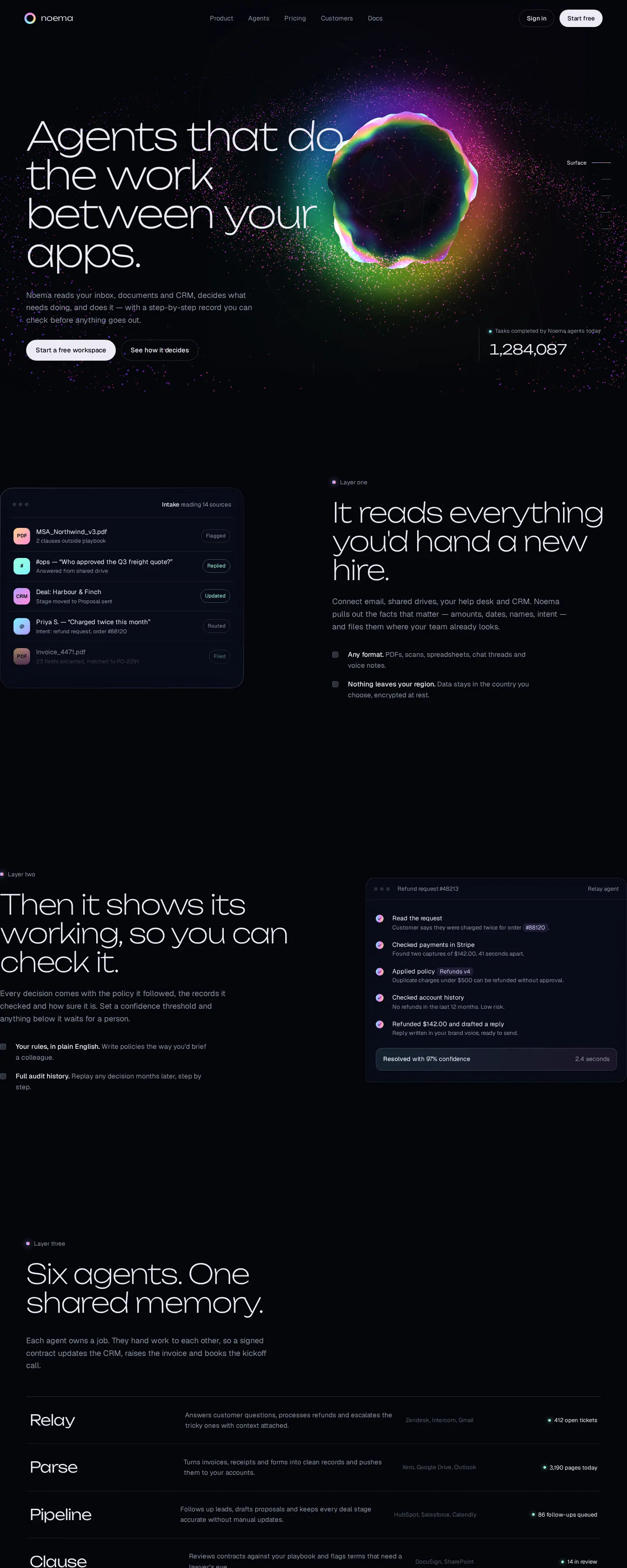
Noema is an AI SaaS marketing-site concept with product explanation, agent categories, evidence, pricing and conversion sections.
Those pages can be designed and built as a marketing website. Building the actual authenticated software behind the product — user accounts, data connections, permissions, workflows and application logic — is a different scope entirely.
This distinction prevents one of the most common pricing misunderstandings in technology projects.
Website design cost vs website development cost
Design and development overlap, but they are not the same cost.
Design decides how the website is structured and experienced: hierarchy, layouts, typography, components, interaction and responsive behaviour.
Development turns those decisions into a working website: templates, CMS, frontend code, integrations, forms, data and deployment.
A design-only project can therefore be significantly less expensive than a full build. Conversely, a visually simple website can be development-heavy if it has complex systems underneath.
Ongoing website costs businesses forget to budget for
The launch invoice is not the entire lifetime cost of a website.
Depending on the stack, ongoing costs may include:
- domain registration;
- hosting or platform subscription;
- paid themes, plugins or apps;
- transaction or payment fees;
- email and form-delivery services;
- maintenance and security updates;
- content changes;
- analytics or consent tools;
- SEO and content work; and
- support retainers.
Ask which of these are included, which are third-party subscriptions, and which continue after the first year.
For Canadian businesses: compare quotes before tax
When comparing Canadian website quotes, check whether the quoted amount includes applicable GST/HST or whether tax will be added on top.
The Canada Revenue Agency explains that taxable supplies made in Canada can be subject to GST or HST depending on the applicable rules and province. Cross-border digital suppliers can also have GST/HST obligations in certain circumstances. See the CRA's digital-economy GST/HST overview.
For budgeting, keep tax separate from the project scope so that you are comparing like with like. This is not tax advice; confirm treatment with the provider or your accountant where necessary.
How to compare two website quotes properly
Put both proposals into the same structure and compare the following:
- Strategy: Is discovery included?
- Design: Template adaptation, pre-designed direction or fully custom?
- Page types: How many unique layouts are designed?
- Content: Who writes and supplies the copy?
- Images: Existing assets, stock, generated imagery or photography?
- Development: Which platform and what custom code?
- Integrations: Which third-party systems are included?
- SEO migration: Are redirects, metadata and old URLs handled?
- QA: Which browsers and devices are tested?
- Launch: Is deployment/domain setup included?
- Support: What happens after launch?
- Ownership: Who owns the domain, code, theme, design assets and accounts?
A C$4,000 quote and a C$12,000 quote may be much closer than they look if the cheaper quote excludes content, migration, custom design and post-launch support.
When is a website template more cost-effective?
A template or pre-designed website usually makes financial sense when:
- the business model is conventional;
- the required pages already fit an established structure;
- the brand can be expressed through typography, colour, imagery and content rather than a completely original interface;
- speed to launch matters; and
- the budget is better spent on strong content, photography or marketing than reinventing common website patterns.
The mistake is choosing a template only because it is cheap. A poor starting point can cost more to fight against than a suitable design costs to customise.
When is fully custom website design worth the cost?
Custom design is easier to justify when:
- the business has a distinctive brand position that existing directions cannot express;
- the website has unusual navigation or content relationships;
- there are multiple audiences or user journeys;
- the project depends on custom interaction or motion;
- the business has complex integrations or application-like behaviour; or
- the website is a major part of the product itself.
Custom should solve a real problem. If it only means “make a different hero section,” the business may be paying for originality that creates little commercial value.
What should a small business budget for a website?
Start with the business requirement rather than an arbitrary percentage.
A useful budgeting sequence is:
- Define what the site needs to make visitors do.
- List the required page types and features.
- Decide what content already exists.
- Choose whether the visual direction can start from an existing design.
- Identify integrations and migration work.
- Separate one-time project costs from recurring platform costs.
- Keep a contingency for scope changes after content is assembled.
This produces a more realistic budget than asking three providers for “a ten-page website” when nobody has defined what those ten pages need to do.
Website design cost FAQ
How much does professional website design cost?
Professional website design can range from a few thousand dollars to tens of thousands depending on scope. Current Clutch data shows most reviewed web-design projects below US$10,000, but complex custom projects can be significantly higher. A quote should be judged against the actual deliverables rather than a market average.
Why can two website quotes be so different?
They may include different amounts of strategy, copywriting, design originality, development, integrations, migration, SEO, QA and post-launch support. Ask both providers to itemise the scope before comparing price.
Is a template website cheaper than a custom website?
Usually, because fewer design decisions begin from zero. The savings depend on how much customisation the business needs. A template that requires extensive structural changes may stop being the economical option.
What ongoing website costs should I expect?
Typical ongoing costs include domain registration, hosting or platform subscriptions, paid apps/plugins, maintenance, security, content updates and marketing tools. Ecommerce businesses may also have payment, transaction and application costs.
Should I pay for a custom website if I am a small business?
Only when the business case supports it. A strong pre-designed or template-led website can be the better investment when the business has conventional needs. Fully custom work makes more sense when the brand, content model, integrations or user journey genuinely require it.
Start with a finished design instead of a blank brief.
Browse Depiction Studio's website designs live, compare how different business types are structured, then own a design or use it as the starting point for a customised build.
Explore website designs ↗